
Why the Democratisation of Investing Could Be Creating the Next Great Market Risk
Every generation believes it has solved the biggest problem facing investors. For decades, the complaint was always the same. “The best companies become successful long before ordinary investors have the chance to own them.” Amazon listed in 1997 when few believed in online retail. Google came to market in 2004 after years of rapid growth. Facebook, Microsoft, Apple and countless other great businesses created extraordinary wealth for early investors before becoming household names. Private equity firms, venture capital funds and institutional investors enjoyed access to these opportunities while most investors waited patiently on the sidelines.
Today, that criticism has largely disappeared. Technology has democratised investing. Anyone can buy shares with a smartphone. Exchange-traded funds provide instant global diversification. Fractional shares allow investors to own companies regardless of share price. Private market platforms increasingly offer exposure to businesses that once remained exclusive to institutions. Information that was once expensive is now available at the click of a button. This is one of the greatest achievements in modern finance. But every solution creates a new problem. The democratisation of investing has not changed the laws of economics. It has simply created more buyers.
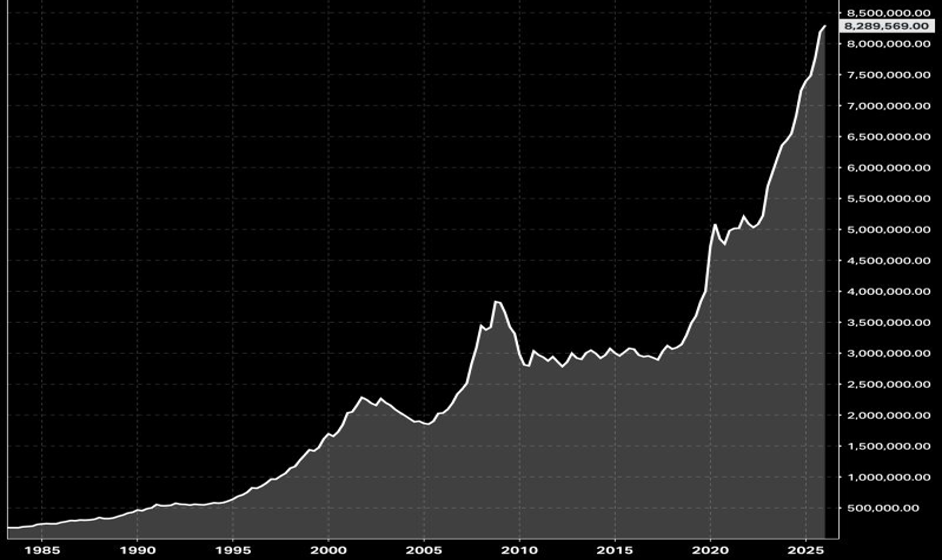
Figure 1: Total Money Market Funds
Source: Koyfin
Never before has so much money been searching for investment opportunities. Global pension funds continue to grow as populations accumulate retirement savings. Sovereign wealth funds manage trillions of dollars. Private equity firms sit on record levels of undeployed capital. Venture capital funds continue to raise billions. Every month, passive investment funds receive new inflows that must be invested irrespective of valuation. Retail investors participate in markets on a scale unimaginable only twenty years ago. None of this capital can remain idle indefinitely. While money market balances are at all time highs (see Figure 1), it must find a home.
The challenge is that the number of truly exceptional businesses has not increased nearly as quickly as the amount of capital competing to own them. The result is simple economics. Too much money + Too few outstanding businesses = Prices rise. Not necessarily because intrinsic value has increased at the same pace, but because competition for ownership has intensified. Markets begin to resemble auctions more than opportunities for rational capital allocation.
Few companies capture today’s investment landscape better than SpaceX. It has transformed the economics of launching satellites, pioneered reusable rocket technology and fundamentally changed what is possible in commercial space exploration. Its technological achievements are extraordinary, and its long-term potential is difficult to overstate. It may ultimately prove to be one of the defining businesses of this century. That, however, is only half of the investment equation. The other half is price. The business may deserve admiration.
Investors often speak about owning great companies as though quality alone guarantees attractive returns. History suggests otherwise. The greatest company in the world can become a poor investment if purchased at an excessive valuation. Conversely, an average business purchased at a significant discount to intrinsic value can generate exceptional long-term returns. This distinction lies at the heart of investing, yet it is often forgotten during periods of optimism. SpaceX illustrates this perfectly.
The excitement surrounding the company has created enormous demand for shares, even before a traditional public listing. Secondary market transactions have attracted intense interest from institutional and sophisticated investors willing to pay increasingly higher prices simply for access. The business may deserve admiration. Whether every valuation deserves admiration is an entirely different question.
SpaceX provides an almost perfect example of this dynamic. Only a relatively small proportion of the company’s economic interest is being made available to public investors, while the majority remains concentrated with existing shareholders and insiders. This creates an unusual supply-and-demand dynamic: investors are not simply being asked to determine what the company is worth; they are being presented with a highly limited supply of shares and effectively told, if you want access to this company, this is the price you must pay. The valuation therefore becomes influenced not only by the underlying economics of the business, but by the scarcity of the shares themselves and the enormous demand to participate in what many believe could be one of the most important companies of the next generation.
For a fundamental investor, this creates an uncomfortable distinction. A valuation should ultimately be anchored to the future cash flows, competitive advantages, capital requirements and risks of a business, not to the value that its founder places on a collection of existing inventions and potential future inventions. The fact that a company may possess extraordinary technology or enormous potential does not make every valuation rational. Potential is not the same as intrinsic value, and scarcity of shares is not the same as economic value.
There is a further governance consideration. When the founder retains a substantial economic interest while maintaining overwhelming voting control, public shareholders may have very limited influence over the capital allocation and strategic decisions that determine their investment outcome. Investors are therefore being asked not only to accept a valuation based on exceptionally ambitious future expectations, but also to accept a governance structure in which their ability to influence those expectations is limited.
This is precisely where the SpaceX opportunity becomes difficult to reconcile with our investment philosophy and process. At Arysteq, we seek to establish intrinsic value through fundamental analysis and then require a meaningful margin of safety between that value and the price we pay. We also place significant emphasis on management quality, capital allocation and alignment between shareholders and those entrusted with their capital. When price discovery is distorted by extreme scarcity, when valuation is driven heavily by expectations of what a company could become rather than what its economics can reasonably support, and when shareholder influence is heavily concentrated, there is simply too much uncertainty for our process to justify committing capital. It does not mean SpaceX cannot become an extraordinary company. It means that an extraordinary company does not exempt us from the discipline of valuation.
Figure 2: P/E Ratios at IPO vs Trough P/E Ratios Post Listing

Source: Arysteq, Bloomberg
*SpaceX not included in Figure 2 as company has reported losses
Markets have always fallen in love with compelling narratives. The “Nifty Fifty” companies of the 1970s were believed to be businesses that investors could buy at any price. Technology stocks during the late 1990s promised to reshape the world. The SPAC boom convinced investors that almost any company associated with innovation deserved public capital. More recently, artificial intelligence has become the latest investment obsession. Notice the pattern? Each period was built around genuine innovation. Each produced extraordinary companies. Each also encouraged investors to believe that valuation had somehow become less important. It never does. Innovation creates value. Overpaying destroys returns (see Figure 2). The two ideas can exist simultaneously!
People are often surprised to learn that at Arysteq we generally avoid investing in initial public offerings. Not because we dislike innovation. Not because we doubt management. Not because we fear change. We avoid them because investing is ultimately a game of probabilities. Consider the incentives. Companies usually choose to list when market conditions are favourable. Investment banks work to maximise demand. Existing shareholders seek attractive valuations. Media coverage reaches its peak. Investor excitement is often at its highest. In other words, almost every participant in the IPO process benefits when optimism is abundant. The long-term investor should ask a different question. “Where is my margin of safety?”
At the time of an IPO, there is often limited public financial history, little opportunity to observe management operating under the scrutiny of listed markets and, perhaps most importantly, valuations that already reflect considerable optimism. Could the company become enormously successful? Absolutely! Could investors still earn disappointing returns? History suggests the answer is equally yes. For us, patience is not a lack of conviction.
It is a deliberate investment strategy. We are comfortable allowing markets to digest the excitement, waiting for additional information and investing only when the relationship between price and intrinsic value becomes compelling. We would rather miss the first chapter than overpay for the entire story.
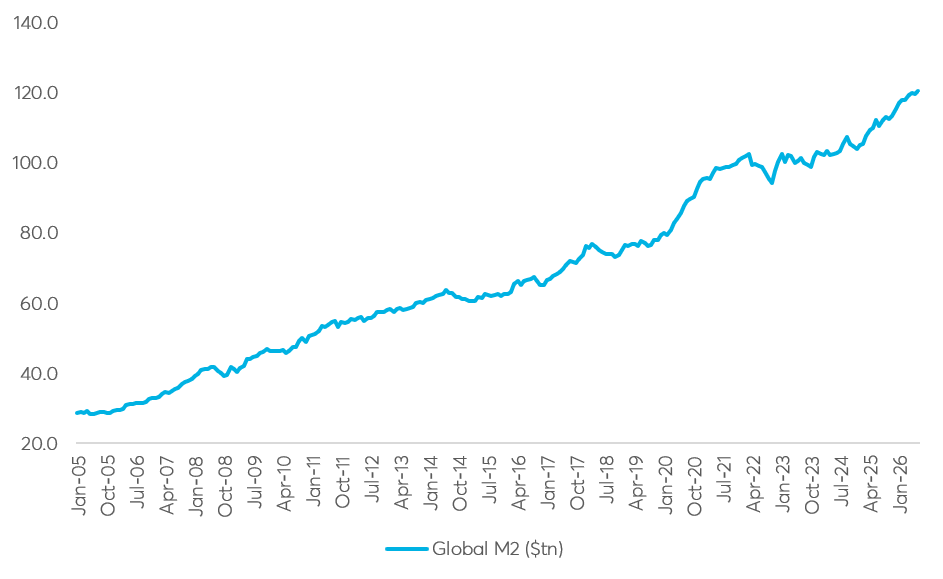
Figure 3: Global M2 Money Supply ($ Trillions)
Source: Arysteq, Bloomberg
The real concern extends well beyond IPOs. It is the sheer quantity of capital now competing for financial assets, with global money supply at all time highs (see Figure 3). When money is abundant, capital allocation becomes less disciplined. Investment committees face pressure to remain fully invested. Passive funds buy companies simply because they are included in an index. Private funds must deploy capital within predetermined timeframes. Retail investors fear missing the next great opportunity. Slowly, almost imperceptibly, one question replaces another. Instead of asking, “What is this business worth?” markets begin asking, “How can we get exposure?”
That shift may appear subtle. It changes everything. Price discovery weakens. Valuation discipline erodes. Momentum replaces analysis. The market becomes increasingly dependent on continued inflows of capital rather than improvements in underlying business value. Eventually, expectations outrun reality. History has shown repeatedly that this is how bubbles begin — not through bad companies, but through excessive prices paid for outstanding ones.
At Arysteq, our investment philosophy was not designed for easy markets. It was designed for markets exactly like these. We believe successful investing requires independent thinking when consensus becomes overwhelming.
It requires patience when others become impatient. It requires humility to admit that even exceptional businesses have prices at which they should not be purchased. Most importantly, it requires a margin of safety.
The father of value investing, Benjamin Graham, described the margin of safety as the central principle of intelligent investing because the future is uncertain. We cannot eliminate risk, but we can reduce it by refusing to overpay. That discipline occasionally means watching exciting companies continue rising without us. We accept that. Our objective has never been to own every fashionable business. Our objective is to compound our clients’ capital over decades while avoiding permanent losses of capital. Those goals are not always compatible.
The democratisation of investing is a remarkable achievement. It has broadened access, lowered costs and enabled millions of people to participate in wealth creation. We should celebrate that. But greater access does not suspend the laws of investing. More buyers do not guarantee higher future returns. More liquidity does not eliminate risk. And great companies do not automatically become great investments. In a world awash with capital, discipline becomes increasingly scarce. Scarcity creates value. Perhaps, today, the scarcest asset of all is the willingness to wait until price once again reflects value. That is an asset we intend to keep.
