
energy, it does not swing wildly, it strikes selectively – when the probability of success is highest. In today’s markets, scale is often mistaken for strength, but concentration is high. Valuations in parts of the market embed very little room for error and passive flows continue to reinforce what has already worked. History tells us this is not permanent. When dispersion returns, leadership broadens and valuation matters again. This is when precision outperforms momentum and discipline outperforms size.
A couple of weeks ago, the team and I were sitting in our Enterprise Room back at the office discussing what we view to be key risks the market is facing at present. On the surface, markets have been resilient. Headline indices continue to perform albeit with a lot more volatility, and in many cases, portfolios look healthy. But underneath that strength, there are a few developments worth paying closer attention to:
None of these are immediate red flags on their own. But together, they create a more fragile environment than headline returns might suggest. Or put differently; the market looks diversified — until it isn’t.
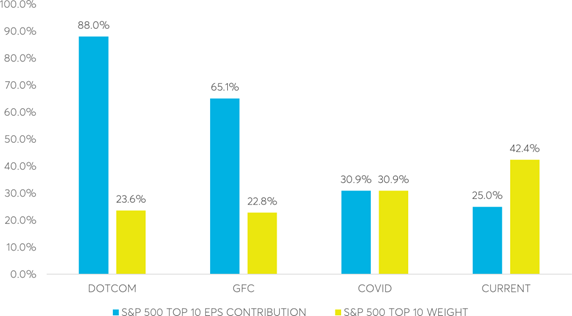
Figure 1: S&P 500 Index Top 10 Contribution
Source: Arysteq/Bloomberg
A defining feature of the current environment is just how much capital has crowded into the same set of companies. This isn’t necessarily because investors lack imagination. In many cases, these are high-quality businesses with strong fundamentals. The challenge is what happens when everyone agrees - future returns tend to compress, small disappointments can have outsized impacts and diversification becomes less effective. It’s a bit like everyone standing on the same side of a sinking ship. It works… until it doesn’t. (see Figure 1)
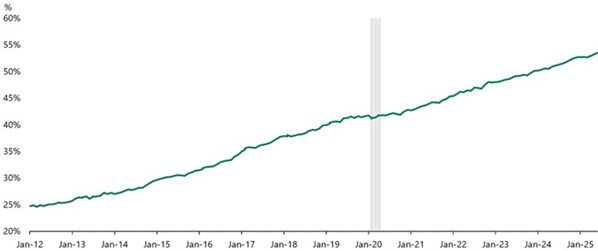
Figure 2: Share of passive ETFs and mutual funds
Source: Arysteq/Apollo
Another structural shift has been the continued rise of passive investing. Passive strategies allocate capital based on index weights — not valuation, not conviction, and not forward-looking fundamentals. This has two important effects:
Over the long term, markets remain efficient. But in shorter periods, they can become a little overconfident. But we’ve seen this before. Periods of narrow market leadership where a handful of companies drive most returns are not new. What tends to follow is a broadening of returns where a wider set of opportunities begins to matter again. We’re not in the business of calling the exact turning point, but we do believe in recognising patterns — and positioning portfolios accordingly. (see Figure 2)
In environments like this, investing becomes less about chasing what is working today, and more about preparing for what could change tomorrow. This is where discipline comes in. For us, that discipline is built on three core principles:
In simple terms: we would rather be approximately right over time than precisely wrong in the short term. One of the biggest misconceptions in investing is that managing risk means being conservative or sitting on the sidelines. In reality, it’s about being selective. Today, that means being mindful of concentration risk in portfolios, avoiding areas where expectations are already stretched and looking for opportunities where the balance between risk and reward is more favourable. We are still investing... we are just being deliberate about where and how much.
In the wake of the AI-driven rally, our assessment was that the so-called “Magnificent Seven”, in aggregate, were trading at valuations that left little room for error. Put differently, our margin of safety requirement was not being met. While parts of the market were pricing in near-perfect outcomes, we were finding more compelling risk-adjusted opportunities elsewhere — including in South African bonds, where real yields remained attractive, and selectively in Namibian government bonds, which continued to offer stability and income in a relatively well-anchored macro environment. At the same time, segments of South African equities were trading at more reasonable valuations which we liked, often reflecting a high degree of pessimism already embedded in prices. In global markets, we also maintained exposure to commodities, including oil, where supply dynamics and geopolitical factors provided a different, and in some cases more favourable, risk-reward profile relative to crowded growth trades.
Following the market pullback into 2025, we selectively increased exposure to high-quality global businesses such as Microsoft and Alphabet, where valuations became more aligned with our framework and qualitative assessments remain strong.
Looking ahead to 2026, our focus remains firmly on execution risk — particularly whether elevated capital expenditure in parts of the technology sector translates into sustainable earnings growth and attractive shareholder returns. More broadly, we continue to assess opportunities across asset classes, allocating capital where the balance between risk and reward is most compelling, rather than where momentum is strongest.
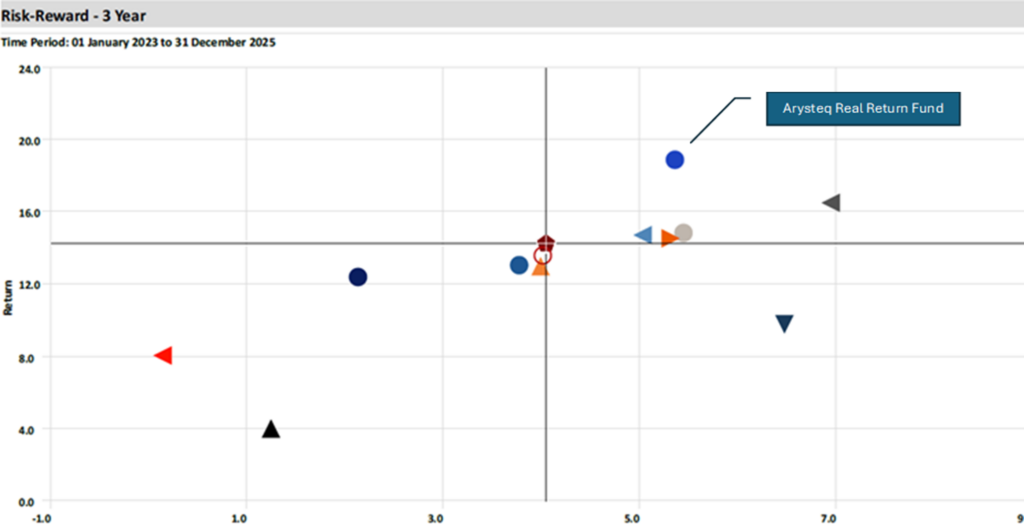
Figure 3: Absolute Mandates Risk Adjusted Returns (3 Years)
Source: Arysteq/NMG Survey
We believe clients need to shift their focus from macro to practical. We’re navigating a period where portfolios may be more correlated than realised. This in turn means that the room for error becomes a lot smaller and margin of safety should be at the top of mind. The headline number we see on fund fact sheets should not be viewed in absolute terms and our focus should be squarely on risk adjusted-returns always.
At Arysteq it’s our willingness to look different that drives the way we think about things like concentration risk. This does however not mean that we are reckless – we are overly cautious when it comes to portfolio construction but once we are satisfied that an investment meets our standard of quality at the right price, our willingness to look different gives us the flexibility to take advantage of these opportunities fully. (see Figure 3)
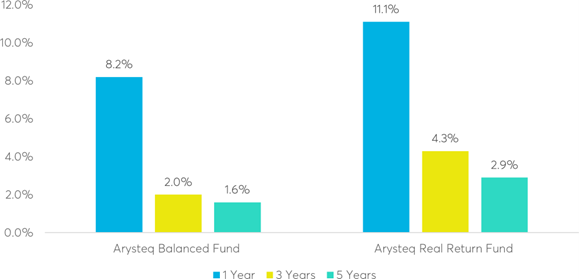
Figure 4: Fund active returns vs peer group average returns at end Feb 2026
Source: Arysteq/Bloomberg
One of the GOATs in tennis was recently quoted saying: “In tennis, perfection is impossible... In the 1,526 singles matches I played in my career; I won almost 80% of those matches. Now, I have a question for all of you... what percentage of the POINTS do you think I won in those matches? Only 54%. In other words, even top ranked tennis players win barely more than half the points they play.” – Rodger Federer
The similarities between this quote and our funds are too telling to ignore. Our funds too have only exceeded that of the peer group around 60% of the time over all months since inception of the fund – yet our Real Return Fund ranks number 1 in its category across all meaningful periods. We believe it is therefore more important to find the right manager in whose philosophy and process you believe as much as they do. The rest, well... in investments too, perfection is impossible. But having a foundation built on a strong philosophy and process, is almost always guaranteed to bring success. (see Figure 4)
